Cleanroom Equipments
Bio Safety Cabinet
SS 304 / 316
Stainless steel grade
Custom
Fabrication to spec
Cleanroom
Category
About This Product
Product Overview
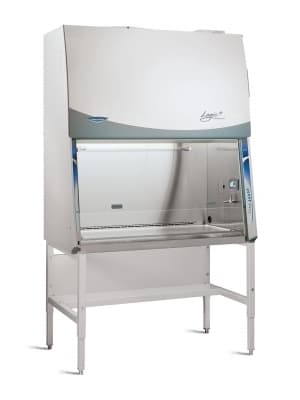
Neelansh equipment & machines is a leading manufacturer, supplier & exporter of bio-safety cabinet. Bio-safety cabinet is mainly used for better micro-biological practices, safe containment zone from infection, micro-organism and better product protection. It provides for an enclosed and ventilated workspace where enclosed space provides better safety.
The cabinet recirculates 70% of the filtered air and exhausts 30% through a HEPA exhaust filter, keeping the work zone at Class 100 (ISO Class 5) while protecting the operator, the product and the environment.
Every bio safety cabinet is manufactured in-house at our factory in Hadapsar, Pune. We supply, install and commission bio safety cabinets across India, including Mumbai, Hyderabad, Chennai, Bangalore and Ahmedabad, and build each unit to your room layout, size and process requirements.
Guide
What is a bio safety cabinet and how does it work?
A bio safety cabinet (BSC), also written biosafety cabinet and called a biological safety cabinet, is a ventilated enclosure for working safely with micro-organisms and other biological material. It protects three things at once: the operator from aerosols created during the work, the sample from contamination, and the laboratory from anything escaping the cabinet.
Room air is drawn in through the front opening, forming an air barrier between the operator and the work. Inside, HEPA-filtered air flows down over the work surface to keep the sample clean. Our standard cabinet then recirculates 70% of the filtered air and exhausts 30% through a mini-pleat HEPA exhaust filter rated 99.97% at 0.3 micron, so only filtered air ever leaves the cabinet.
This makes a BSC very different from laminar air flow units, which protects only the product and blows air at the operator, and from a fume hood, which removes chemical vapours but does not keep the work clean. Choose the BSC for infectious or biological material.
Classes
Bio safety cabinet classes explained
Class I
Protects the operator and the environment with inward airflow and a HEPA exhaust, but not the sample. Now rarely chosen for new labs.
Class II
Protects operator, sample and environment. The most widely used type in microbiology, pharma and hospital labs. A 70% recirculation / 30% exhaust design, like ours, is the airflow pattern of a Class II Type A cabinet.
Class III
A fully sealed, gas-tight glove box for the highest-risk agents, used in specialist containment labs.
Applications
Where bio safety cabinets are used
Pharma microbiology
Sterility testing, microbial limit tests and environmental monitoring samples in QC labs.
Biotech and research
Cell culture, vaccine and biologics research, and work with genetically modified organisms.
Hospitals and diagnostics
Clinical microbiology, pathology and TB culture labs handling patient samples.
Food and water testing
Microbiological testing of food, water and environmental samples.
Academic labs
Teaching and research labs in colleges and universities.
Veterinary labs
Handling animal samples and cultures safely.
Buying guide
How to choose the right bio safety cabinet
Risk of the work
Match the cabinet to the organisms you handle and your lab's biosafety level. Class II covers most microbiology, pharma QC and clinical work.
Chemicals in the process
A recirculating cabinet is not meant for volatile or toxic chemicals. For chemical vapours, use a fume hood or a ducted total-exhaust design.
Width and access
Choose the working width for your equipment and the number of users, and check the doorway and room height for delivery.
Filtration
HEPA filters on both the downflow and the exhaust, with a magnehelic gauge to watch filter loading.
Build and comfort
SS 304 work zone, glass side panels for light, a counter-balanced sliding front window, low noise and good lighting for long sessions.
Testing and certification
Plan for HEPA integrity (PAO), airflow velocity and inflow checks at installation and at least once a year. A PAO port makes this simple.
How we work
From enquiry to installation
Every bio safety cabinet is built to order through the same six stages, so the unit fits your room and your process.
- 01
Planning: your room layout, process and transfer or work needs
- 02
Evaluation: size, airflow, filtration and material grade
- 03
Inspection: site measurements and wall or ceiling openings
- 04
Design: drawings shared for your approval before fabrication
- 05
Manufacturing: fabricated in-house at our Pune factory
- 06
Installation: delivered, installed and commissioned at your site
Supply across India
Bio safety cabinet manufacturer in Pune, supplying across India
Neelansh Equipments & Machines manufactures bio safety cabinets in-house at our factory in Hadapsar, Pune. We supply, install and commission them across India, including Mumbai, Hyderabad, Chennai, Bangalore and Ahmedabad, with design and dimensional customisation available on request.
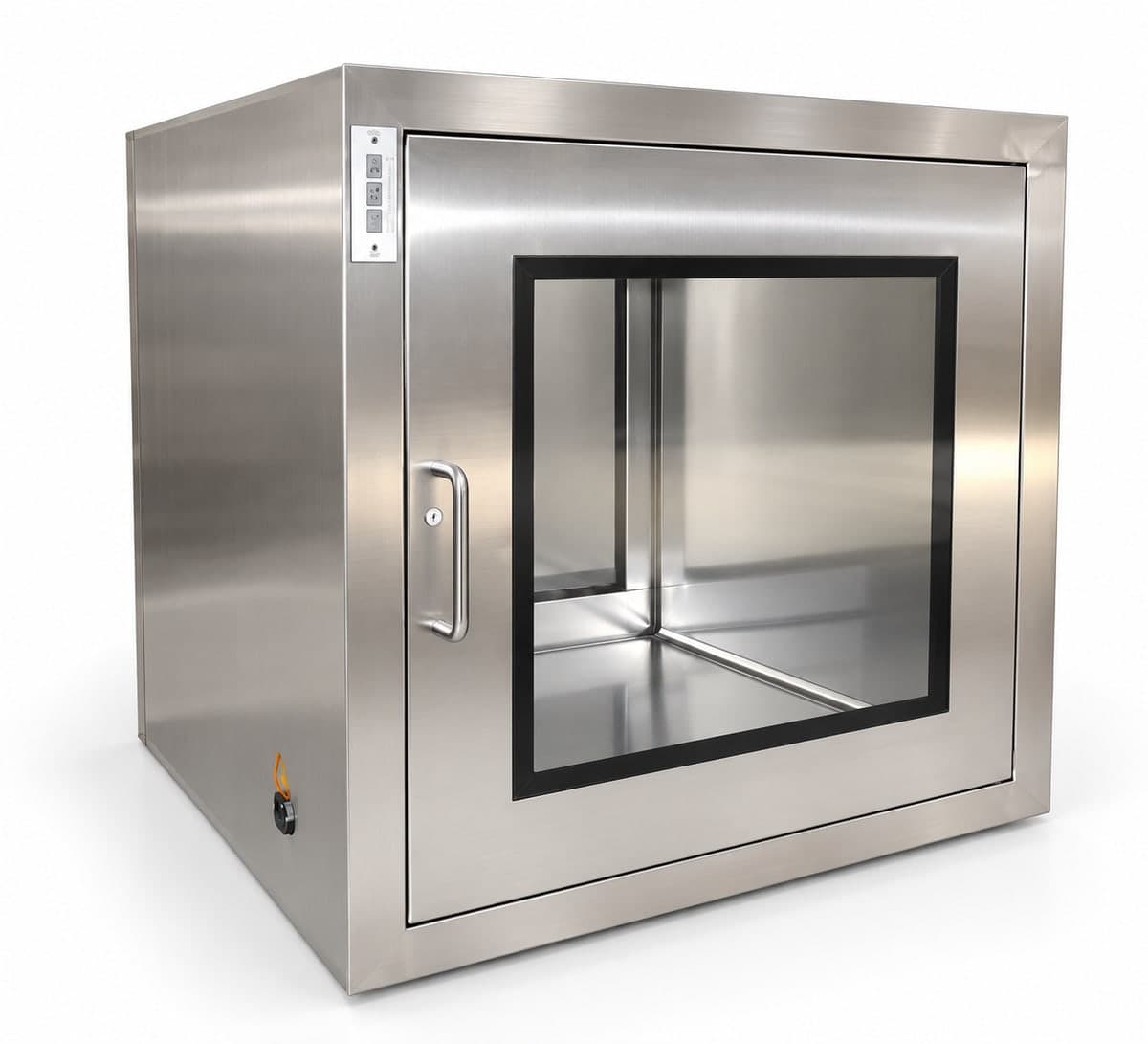
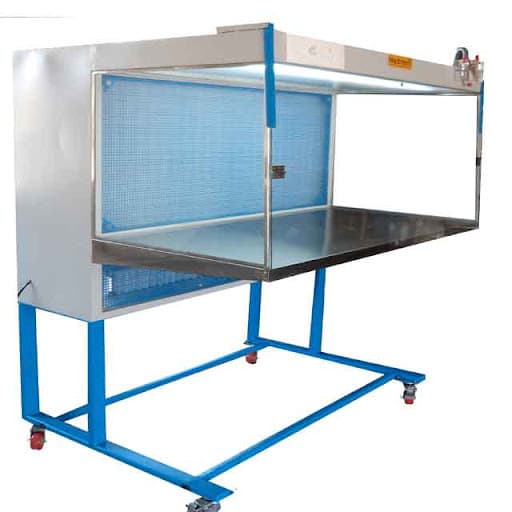
Microbiology labs usually also need pass boxes for moving samples in and out and laminar air flow units for clean, non-hazardous work. Tell us about your lab and send us your requirement for a quotation. For chemical fumes rather than biological agents, a fume hood is the right enclosure. See all cleanroom equipment.
Product Details
Specifications
| MOC | Stainless Steel 304 grade/ Powder coated MS |
|---|---|
| Air Balancing | 70% Re-circulation & 30% Exhaust Laminar Air |
| Pre Filter | EU-5 rating (Efficiency 95% Down to 5 µm) |
| Exhaust Filter | Minipleat HEPA Filter (efficiency 99.97% down to 0.3 micron) |
| Air Cleanliness | Class 100, ISO Class 5 |
| Average Air Flow Velocity | Rated At working Place 90±20% FPM (0.45 ± 0.05 mps) |
| Noise Level | Less than 68±3 dB on a scale |
| Air Blower | 0.5HP 1400 RPM single phase running at 230 V, 50/60 Hz motor blower |
| Side Panel | Transparent Glass double skin walled View Panel |
| Doors | SS 304 upper Sliding type door construction with 4mm Transparent polycarbonate sheet view panels with proper door weight balancing, SS 304 Handles |
| Lighting | Fluorescent Tube with Milky White Diffuser Candles at Work Place |
| Electricals | Microprocessor Based Control System with Single Phase 220v~240v 50HZ: On/Off Switches |
| PAO Port | Poly Alfa Olefin HEPA Integrity Test Port |
| Standard Fitting | Magnehelic Differential Pressure Gauge; UV Lights; Hour Meter; Centrifugal Forward Curved Motor Blower |
- Well engineered and specific design.
- Also used for outdoor applications.
- Hassle free installation and easy maintenance.
- Longer functional and service life.
- Having good durability and long lasting.
Questions
F.A.Q.
What is the difference between a bio safety cabinet and a laminar air flow?
A laminar air flow protects only the product. A bio safety cabinet protects the operator, the product and the environment: it recirculates 70% of the HEPA-filtered air and exhausts 30% through a HEPA exhaust filter, so it is used for work with micro-organisms and infectious material.
Can you make a bio safety cabinet in a custom size?
Yes. Design and dimensional customisation is available on request.
Do you supply and install bio safety cabinets outside Pune?
Yes. We manufacture in Pune and supply, install and commission bio safety cabinets across India, including Mumbai, Hyderabad, Chennai, Bangalore and Ahmedabad. Share your requirement and we will send a quotation.
Which class of bio safety cabinet do I need?
Most microbiology, pharma QC, hospital and research labs use a Class II cabinet, which protects the operator, the sample and the environment. Class III sealed glove boxes are only needed for the highest-risk agents. Match the choice to your organisms and your lab's risk assessment.
How often should a bio safety cabinet be tested?
At installation, after it is moved or a filter is changed, and at least once a year: HEPA filter integrity (PAO), downflow and inflow velocity, and alarm and UV checks. Our cabinets have a PAO port for filter testing.
Can a bio safety cabinet be used with chemicals?
A recirculating cabinet is not suitable for volatile or toxic chemicals, because filtered air returns to the cabinet and the room. Use a fume hood or a ducted total-exhaust cabinet for chemical vapours.
Our Products
Related Cleanroom Equipments
Explore more cleanroom equipments solutions from the same range.
Need a Custom Solution?
Need a custom Bio Safety Cabinet or a specific configuration? Our team will help you find the right solution.
- Custom Fabrication
- SS 304 / 316 Quality
- Manufacturer & Exporter
Get In Touch
Enquire About This Product
Have a project in mind? Send us your details and we'll get back to you soon.
Call Us
Email Us
Visit Us
A-302, Binawat Majestic, Sasane Nagar Road, Hadapsar, Haveli, Pune-411028, Maharashtra, India