Buyer's guide
Revised Schedule M: a checklist for cleanroom equipment and furniture
What India's revised GMP rules ask of the equipment, furniture and premises in your clean areas, the clause to check for each item, and what to ask your supplier.
Where things stand
Revised Schedule M in brief
Revised Schedule M, notified as G.S.R. 922(E) dated 28 December 2023 and published in January 2024, replaced the old Schedule M of the Drugs Rules, 1945. Its title says what it covers: good manufacturing practices and requirements of premises, plant and equipment for pharmaceutical products. Compliance is a condition of the manufacturing licence, and the licensee carries the responsibility.
Manufacturers with turnover above ₹250 crore had six months from publication and smaller ones twelve. G.S.R. 127(E) of 11 February 2025 let small and medium units apply in Form A, with an upgrade plan, for an extension to 31 December 2025; Form A's gap analysis lists plant, equipment, lab equipment and the HVAC system as separate heads. As of October 2026, CDSCO's list of notifications shows no further extension. State licensing authorities enforce the rule through inspections, and inspections of units that took the extension were reported to start in January 2026.
Part I sets the general rules, including premises (section 12) and equipment (section 13). Product parts follow: Part II for sterile products, Part III for hazardous substances, Part IV for biologicals, Part VIII for tablets and capsules, Part IX for oral liquids and Part XII for APIs. Part XIII lists recommended plant and equipment. Clause numbers restart in each part, so this checklist cites them as, for example, Part II, 8.8.
The checklist
Equipment and furniture: what the rule asks and what to check
Each row gives the requirement in short, the clause, the equipment that usually serves it and what to look for when you buy.
| Area | What Schedule M asks | Clause | Equipment that serves it | What to check when you buy |
|---|---|---|---|---|
| Equipment design | Equipment located, designed and maintained to minimise errors and allow effective cleaning, without dust build-up or cross-contamination | Part I, 13.1 and 13.2 | All cleanroom equipment and furniture | Smooth welds, rounded corners, no hollow sections that trap dust, easy access for cleaning |
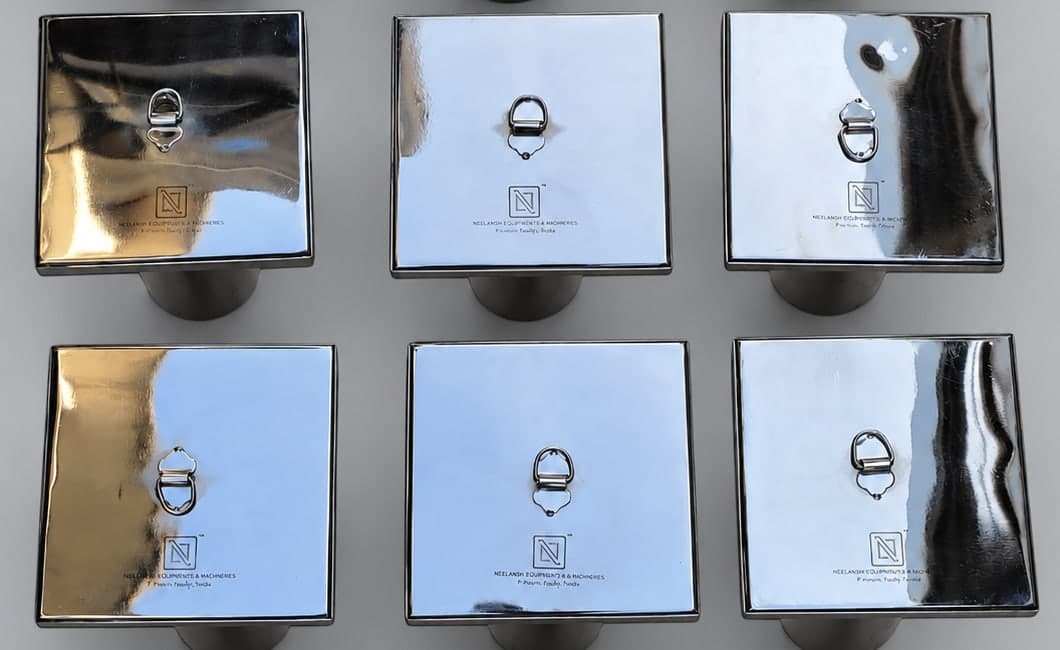
| Product-contact parts | Parts in contact with the product must not be reactive, additive or absorptive | Part I, 13.9 | SS containers, scoops, sieves, stirrers | The stainless steel grade of contact parts stated in writing; SS 316L where your process needs it |
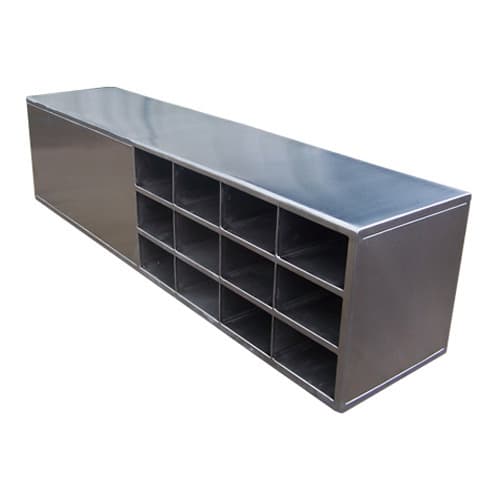
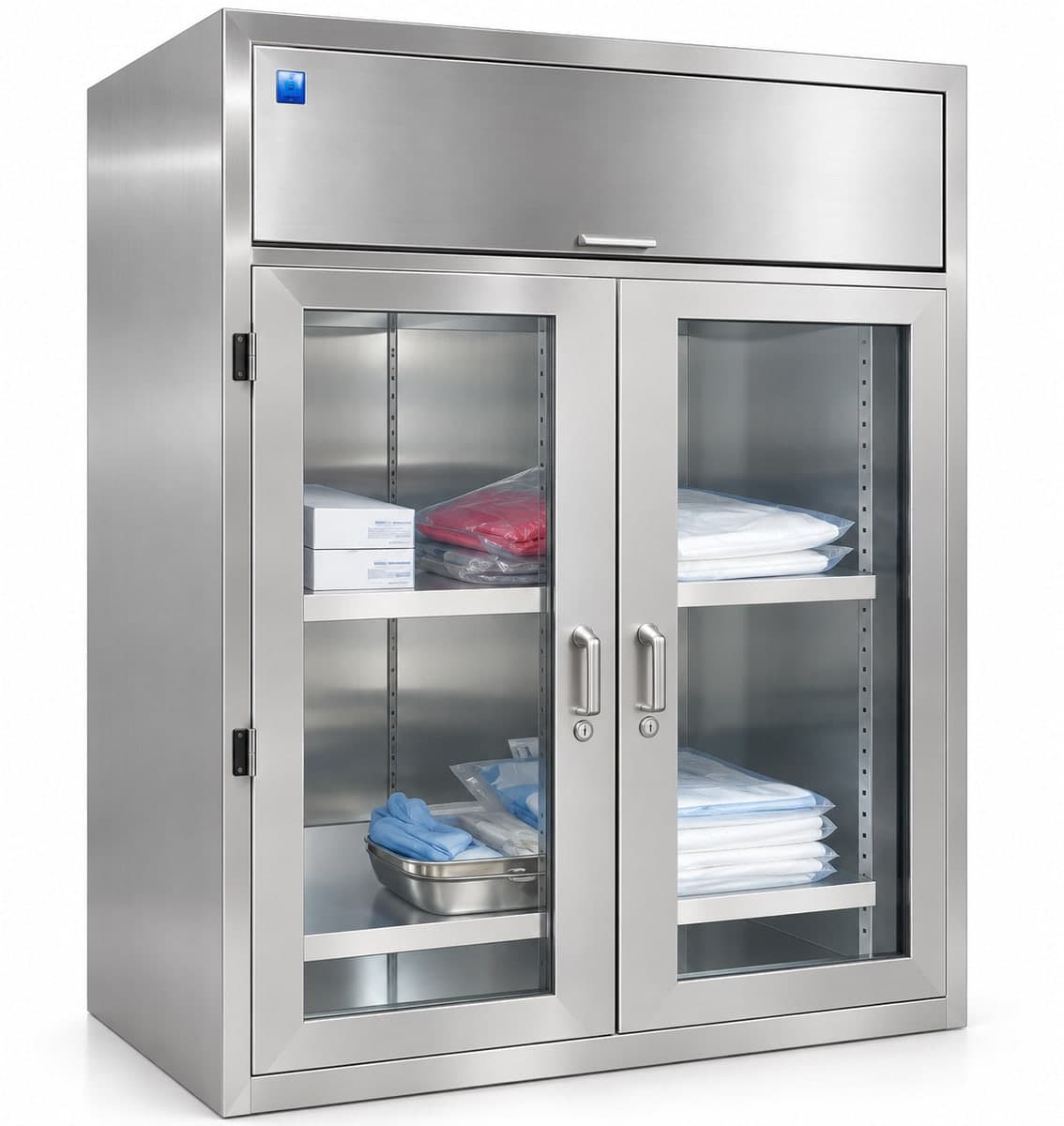
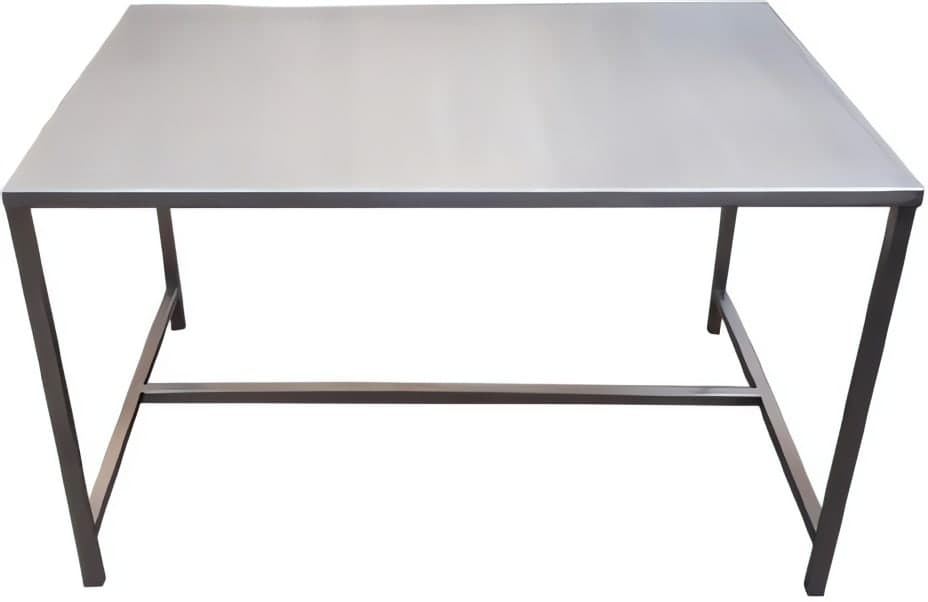
| Clean-area surfaces and furniture | Exposed surfaces smooth, impervious and unbroken; no uncleanable recesses and a minimum of ledges, shelves and cupboards; furniture smooth, washable and of stainless steel or another appropriate material | Part II, 8.2 and 8.3; Part IX, 2.11 | SS working tables, racks, cupboards | Closed or sloped tops, no open box sections, no wooden items (Part VIII, 1.3) |
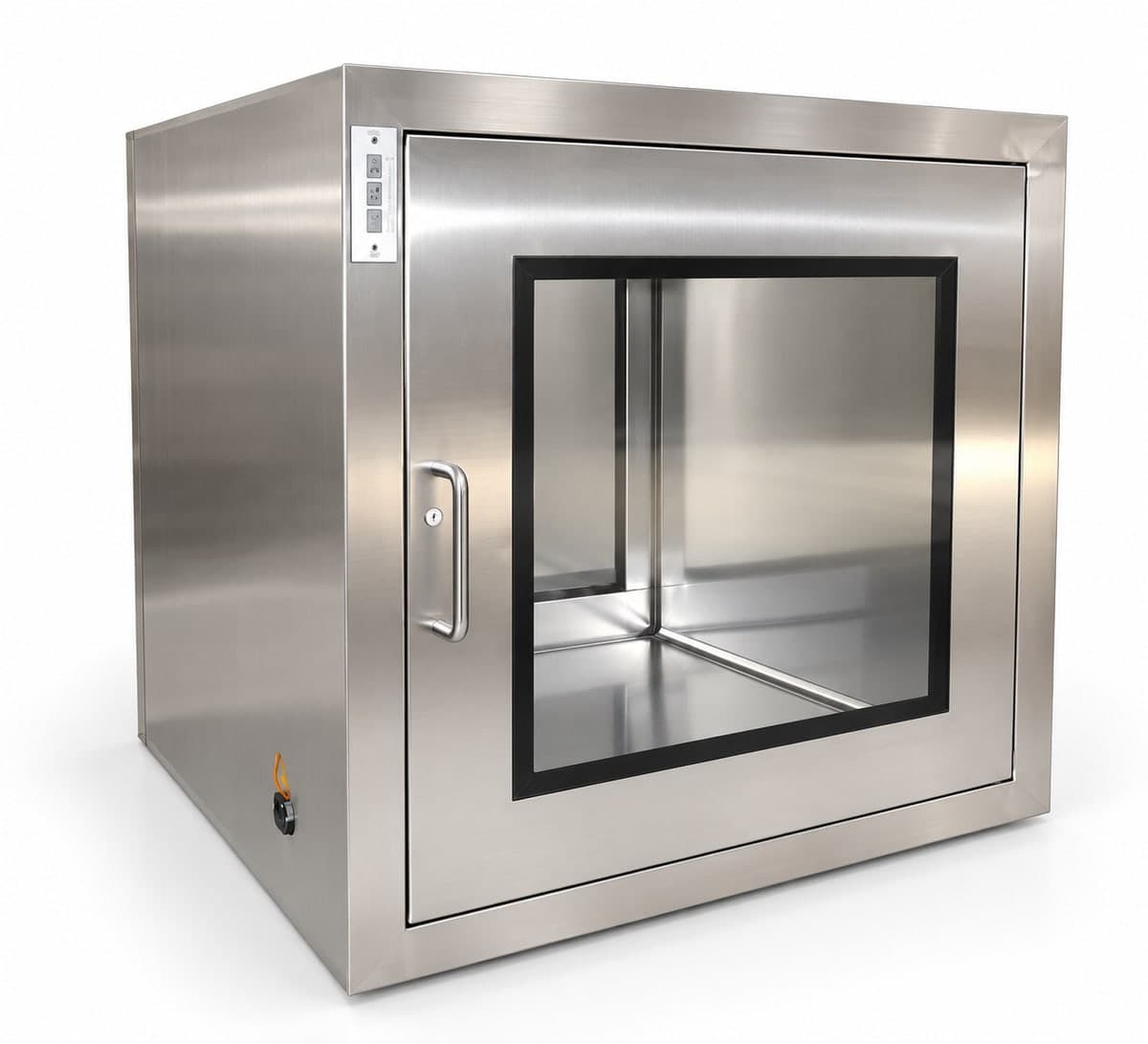
| Material transfer | Pass boxes and pass-through hatches separate zones, and dynamic ones have an air supply or extraction; airlock doors must not open together, with an interlock and a warning | Part VIII, 1.26 and 1.21; Part III, 6.2; Part II, 8.8 | Static and dynamic pass boxes | An interlock with a visual or audible warning; HEPA filter, pressure gauge and PAO test port on dynamic units |
| Change rooms | Designed as airlocks and flushed with filtered air; the final stage the same grade as the room it leads to; mirrors; a step-over bench in hazardous-product plants | Part II, 8.7; Part III, 6.3 | Cross-over benches, lockers, garment cubicles | Bench length matched to the room; separate storage for clean and used garments |
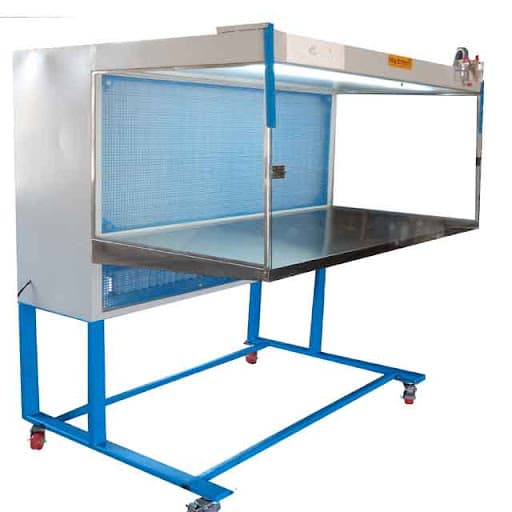
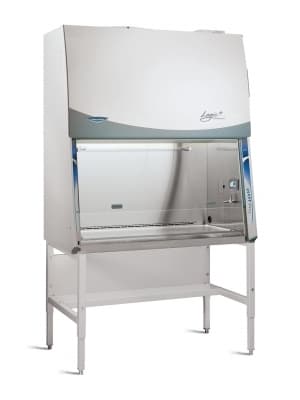
| Grade A zones | Normally a unidirectional airflow workstation: 0.36 to 0.54 m/s as a guidance value, not less than 0.36 m/s at working level, with airflow visualisation | Part II, 4.3 | Laminar air flow units | The rated air velocity, a smoke test at installation and a PAO port for the HEPA leak test |
| Filters and classification | Clean rooms and clean-air devices classified to ISO standards; HEPA filters leak-tested every six months, not exceeding twelve | Part II, 4.5 and 4.6 | Laminar air flow units, dispensing booths, dynamic pass boxes, biosafety cabinets | A PAO or DOP test port on each HEPA filter and the filter class stated (H13 minimum where Part III applies) |
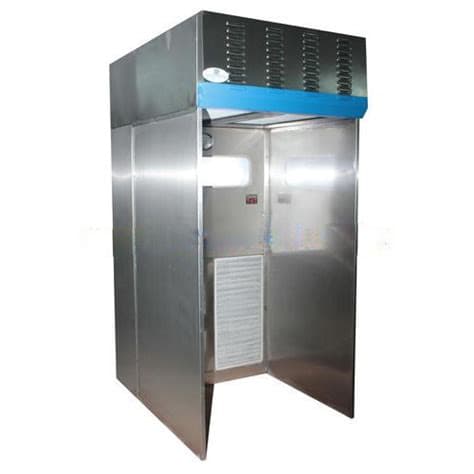
| Weighing and sampling | Separate weighing areas with dust control; a separate sampling area as a rule; a classified weighing booth for media and buffers in biologicals | Part I, 12.5 and 12.4.8; Part IV, 6.5 | Dispensing booths (RLAF) | Air velocity that does not disturb balance readings, and a log book for the booth |
| Drains and sinks | No sinks or drains in Grade A and B aseptic zones; elsewhere easily cleanable traps and air breaks against backflow | Part II, 8.6; Part I, 12.6.6 | SS drain traps, SS sink units | A trap that can be opened and cleaned, placed outside Grade A and B |
| Biological work | A biosafety hood for primary containment in inoculum preparation; open-vessel cell culture in a biosafety cabinet; containment equipment qualified and periodically tested | Part IV, 9.3 and 7.7; Part XII, 17.3.2 | Biosafety cabinets | Class and type matched to the agent; inflow and HEPA tests at installation |
| Qualification and records | DQ, IQ, OQ and PQ evidence and requalification after significant change; current drawings of critical equipment; an SOP at each piece of equipment; records of cleaning, calibration and maintenance | Part I, 5.3 to 5.5, 13.13, 17.3.10.5 and 17.3.10.16 | Every piece of equipment | Ask which documents the supplier provides: drawings, material details, filter test reports and support for IQ and OQ |
What the rule does not say
Myths to avoid when you buy
There is no such thing as Schedule M certified equipment. The rule makes the licensee responsible for the quality of its products and contains no approval or certification scheme for equipment. Where a Revised Schedule M certificate exists, for example for the RPTUAS subsidy, the drug regulator issues it for a manufacturing unit after assessment, not for a product. Ask instead for the drawings, material details and test reports you can put into your own qualification file.
The rule does not name a stainless steel grade for cleanroom furniture, pass boxes or cabinets. Its tests are functional: non-reactive contact parts, smooth and cleanable surfaces, and furniture of stainless steel or another appropriate material. It specifies SS 316L only for the water for injection storage tank and loop in parenteral plants. Inspectors may still ask, and CDSCO's inspection checklist mentions SS 316 furniture, so state the grade on every order.
It does not use the words dispensing booth, reverse laminar air flow or garment cubicle, and it requires air showers only for leaving containment areas in hazardous-product plants. CDSCO's risk-based inspection checklist does ask about reverse laminar air flow units for sampling and dispensing, dynamic pass boxes between areas of different air class, door interlocks and cross-over benches, so these remain what inspectors look for.
For sterile products, the Part II text follows the older WHO sterile annex. A CDSCO circular of 7 August 2024 points sterile and vaccine manufacturers to the 2022 WHO good manufacturing practices for sterile products, so check your design against both.
Funding
RPTUAS: government support for upgrades
The Department of Pharmaceuticals' Revamped Pharmaceuticals Technology Upgradation Assistance Scheme (RPTUAS) helps existing units with average turnover under ₹500 crore upgrade to revised Schedule M and WHO-GMP. It reimburses 10% to 20% of eligible investment, depending on turnover, up to ₹2 crore per unit, for spending after 1 January 2024. Eligible items include utilities such as HVAC, clean room facilities and, since September 2024, production equipment; the scheme's technical committee decides each case.
Its approved outlay covered 2024-25 and 2025-26, and by February 2026 sanctions had been given to 255 companies. Check the Department of Pharmaceuticals scheme page for whether applications are open now.
Planning an upgrade
How to use this checklist
Start from your gap analysis; the Form A heads of plant, equipment, lab equipment, HVAC and utilities give it a good structure. For each area, list the equipment, the grade of the room it serves and the clause it answers. Then send equipment enquiries with the room grade, sizes, material grade and the documents you need.
We manufacture the pass boxes, laminar air flow units, dispensing booths, bio safety cabinets and stainless steel furniture in this checklist in-house at our factory in Hadapsar, Pune, to standard designs or your dimensions. Tell us the room grade and the clause you are working to, and we will propose the right unit. Send your requirement.
This page summarises the regulation for planning. It is not legal advice; always check the notified text and your QA team's interpretation.
Products
Equipment and furniture for Schedule M upgrades
Questions
F.A.Q.
What is revised Schedule M?
The updated good manufacturing practice requirements of India's Drugs Rules, 1945, notified as G.S.R. 922(E) dated 28 December 2023. It covers premises, plant, equipment, documentation and quality systems for pharmaceutical manufacturers, and compliance is a condition of the manufacturing licence.
What was the deadline for MSMEs?
Twelve months from publication in January 2024, extended to 31 December 2025 for small and medium units that applied in Form A with an upgrade plan under G.S.R. 127(E). As of October 2026, no further extension has been notified.
Is there a Schedule M certificate for equipment?
No. The rule contains no equipment certification; compliance is assessed for the manufacturing unit by the drug regulator. Buy equipment with the drawings, material details and test reports you need for your own qualification.
Does Schedule M require SS 316 stainless steel?
Not for furniture or cleanroom equipment in general. It asks for non-reactive contact parts and smooth, washable surfaces, and names SS 316L only for the water for injection tank and loop. Many buyers still choose SS 316 for contact parts and strong disinfectants, so state the grade you need on the order.
Does Schedule M require a dynamic pass box?
It recognises both passive and dynamic pass-through hatches (Part VIII, 1.26) and requires that airlock doors cannot open together, with an interlock and a warning (Part II, 8.8). Inspectors look for dynamic pass boxes between areas of different air class, so choose by the grades on each side.
Can RPTUAS pay for cleanroom equipment?
The scheme lists clean room facilities, HVAC and production equipment among eligible items, and its technical committee decides each case. Check the Department of Pharmaceuticals scheme page for whether applications are currently open.
Upgrading for Schedule M?
Send your room grades, sizes and the equipment list from your gap analysis, and we will reply with the right units and options.