SS 304 / 316
Stainless steel grade
Custom
Fabrication to spec
Cleanroom
Category
About This Product
Product Overview
Key functions: removes hazardous fumes and vapors; protects personnel during handling; prevents exposure to toxic chemicals; maintains a safe working environment; controls airborne contaminants; supports laboratory safety.
Guide
What is a fume hood and how does it work?
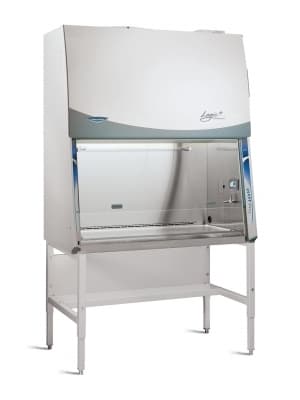
A fume hood is a ventilated, partly enclosed work cabinet in which chemists handle substances that give off harmful fumes, vapours or dust. It protects the person working at it, and the rest of the laboratory, by pulling those fumes away from the operator's breathing zone and sending them out of the building.
An exhaust blower connected to the hood through ductwork keeps the inside of the hood at a lower pressure than the room. Room air is drawn in steadily through the front opening and sweeps across the work surface, carrying fumes back and up into the exhaust, which discharges them outdoors where they are diluted. The speed of the air entering the opening, called the face velocity, is what keeps fumes inside; it is commonly set between about 0.3 and 0.5 m/s. People walking past, open doors and fast arm movements can disturb it, so hoods are placed away from doors and busy walkways.
The front sash is a sliding glass panel. Kept low while working, it reduces the size of the opening so the same exhaust air moves faster through it, and it acts as a shield between the operator and the experiment. It is raised fully only to set up equipment.
A fume hood is not a laminar air flow unit or a bio safety cabinet. A laminar air flow unit blows filtered air towards the work to protect the product, and a bio safety cabinet is designed for biological material. A fume hood is designed to remove chemical fumes, so choose it for work with solvents, acids and other volatile chemicals.
Not sure whether you need a laminar air flow, a biosafety cabinet, a dispensing booth or a fume hood? Our comparison guide sets them side by side.
Construction
What goes into our fume hood
SS 304, SS 316 or powder-coated MS
The body is built in stainless steel or in mild steel with a powder-coated finish, to suit the chemicals used and your budget.
Exhaust system
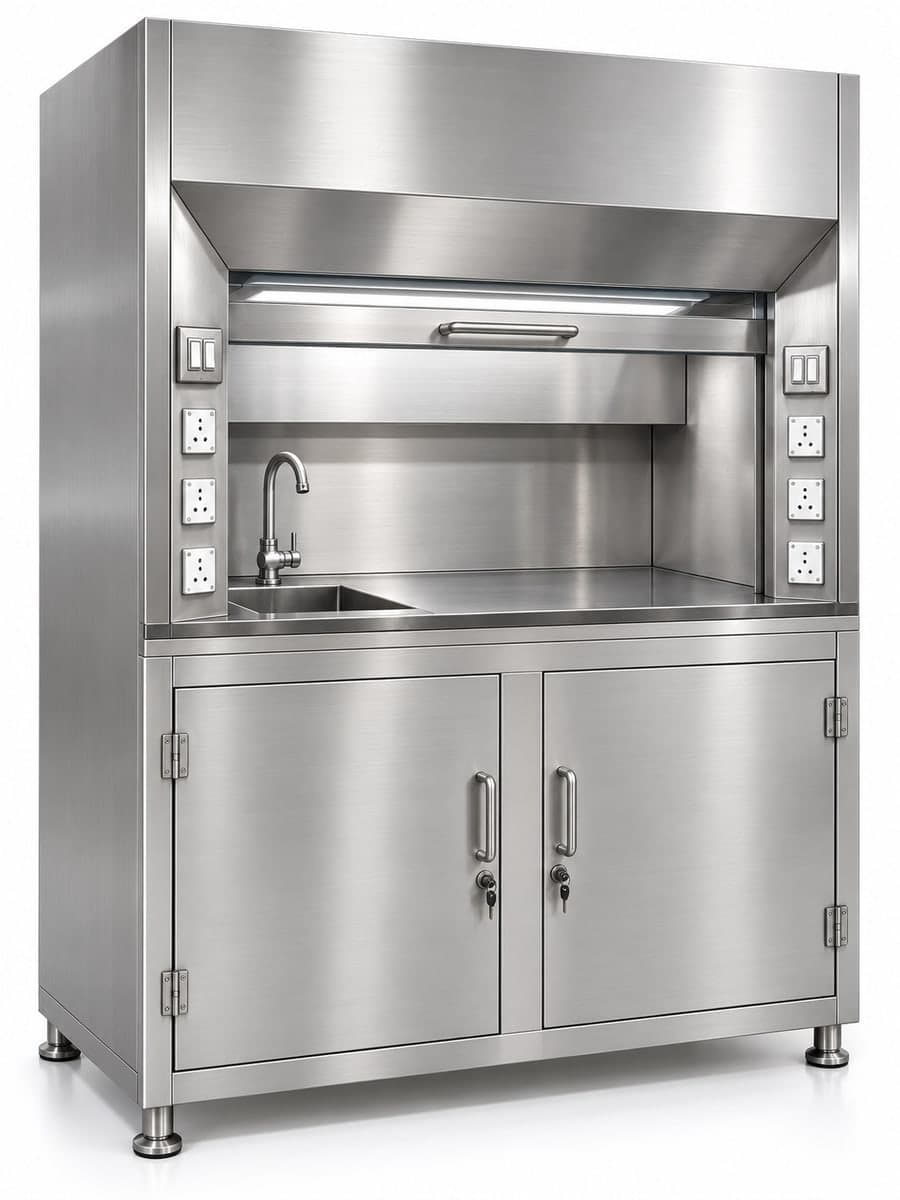
A high-efficiency exhaust draws fumes from the work area and out of the hood.
Adjustable front sash
A sliding sash lets the operator set the opening to the work, protecting them and helping the exhaust work well.
Chemical-resistant work surface
A worktop that stands up to the chemicals and spills of daily laboratory work.
Sink and tap
A sink with tap inside the hood for rinsing glassware and handling liquids where the fumes are captured.
Sockets, switches and LED light
Power sockets and switches built into the side panels, with LED lighting over the work surface.
Applications
Where fume hoods are used
Chemistry labs
Handling solvents, acids, bases and reagents that give off vapours.
Pharmaceutical QC labs
Sample preparation, wet chemistry and tests that use volatile chemicals.
R&D and formulation labs
Development work with solvents and reactive substances.
Colleges and universities
Teaching laboratories where students handle chemicals.
Food testing labs
Digestion, extraction and other tests that release fumes.
Industrial testing labs
Material and environmental testing with corrosive or volatile reagents.
Buying guide
How to choose the right fume hood
Chemicals used
List the chemicals you work with. Strong acids and solvents decide the body material and the worktop.
Width and working height
Size the hood to the equipment inside it and the number of people who use it, and check the room's door and ceiling height.
Exhaust and ducting
Plan the duct route from the hood to the outside, and where the exhaust air will discharge, before the hood arrives.
Sash and face velocity
Agree the sash working height and the face velocity you want at that height, so the exhaust can be sized for it.
Sink, water and drain
If you need a sink, plan the water supply and drain connection at the hood's position.
Power and lighting
Tell us how many sockets and switches you need and where, so they are built into the side panels.
How we work
From enquiry to installation
Every fume hood is built to order through the same six stages, so it fits your site and the way you work.
- 01
Planning: your laboratory layout, chemicals and work done in the hood
- 02
Evaluation: size, body material, worktop, sash, sink and sockets
- 03
Inspection: room size, duct route, water, drain and power at your site
- 04
Design: drawings shared for your approval before fabrication
- 05
Manufacturing: fabricated in-house at our Pune factory
- 06
Installation: delivered, installed and commissioned at your site
Supply across India
Fume hood manufacturer in Pune, supplying across India
Neelansh Equipments & Machines manufactures fume hoods in-house at our factory in Hadapsar, Pune, in SS 304, SS 316 and powder-coated MS, and supplies and installs them across India, including Mumbai, Hyderabad, Chennai, Bangalore and Ahmedabad.
Laboratories usually need other cleanroom equipment alongside a fume hood: a bio safety cabinet for microbiology work, a laminar air flow unit for clean product handling and an SS sink unit for washing. Tell us the size, material and services you need, and send us your requirement for a quotation.
Product Details
Specifications
- MS Powder Coated/SS 304/SS 316 construction
- High-efficiency exhaust system
- Adjustable front sash
- Chemical-resistant work surface
- Built-in LED lighting
- Easy-to-clean hygienic design
Questions
F.A.Q.
Do you supply and install fume hoods outside Pune?
Yes. We manufacture in Pune and supply and install fume hoods across India, including Mumbai, Hyderabad, Chennai, Bangalore and Ahmedabad. Share your requirement and we will send a quotation.
What is the difference between a fume hood and a bio safety cabinet?
A fume hood removes chemical fumes and vapours and exhausts them outside, protecting the operator. A bio safety cabinet uses HEPA-filtered air to protect the operator, the sample and the lab during work with biological material. Use a fume hood for chemicals and a bio safety cabinet for microorganisms.
Which material should I choose for a fume hood?
SS 304 suits most laboratories. SS 316 resists corrosive chemicals better, and powder-coated mild steel is an economical option where the chemicals used are not aggressive to it.
Our Products
Related Cleanroom Equipment
Explore more cleanroom equipment solutions from the same range.
Need a Custom Solution?
Need a custom Fume Hood or a specific configuration? Our team will help you find the right solution.
- Custom Fabrication
- SS 304 / 316 Quality
- Manufacturer & Exporter
Get In Touch
Enquire About This Product
Have a project in mind? Send us your details and we'll get back to you soon.
Call Us
Email Us
Visit Us
A-302, Binawat Majestic, Sasane Nagar Road, Hadapsar, Haveli, Pune-411028, Maharashtra, India